
VOL. VI · ISSUE 1,847
TUESDAY, JANUARY 14
36°F IN THE FLATIRON DISTRICT
DAILY MINUTE · EPISODE 1,847
Solar & Renewable Energy
China’s 2030 Energy Transition Plan Signals a Structural Rewiring of the World’s Largest Power System
Listen · 58 sec
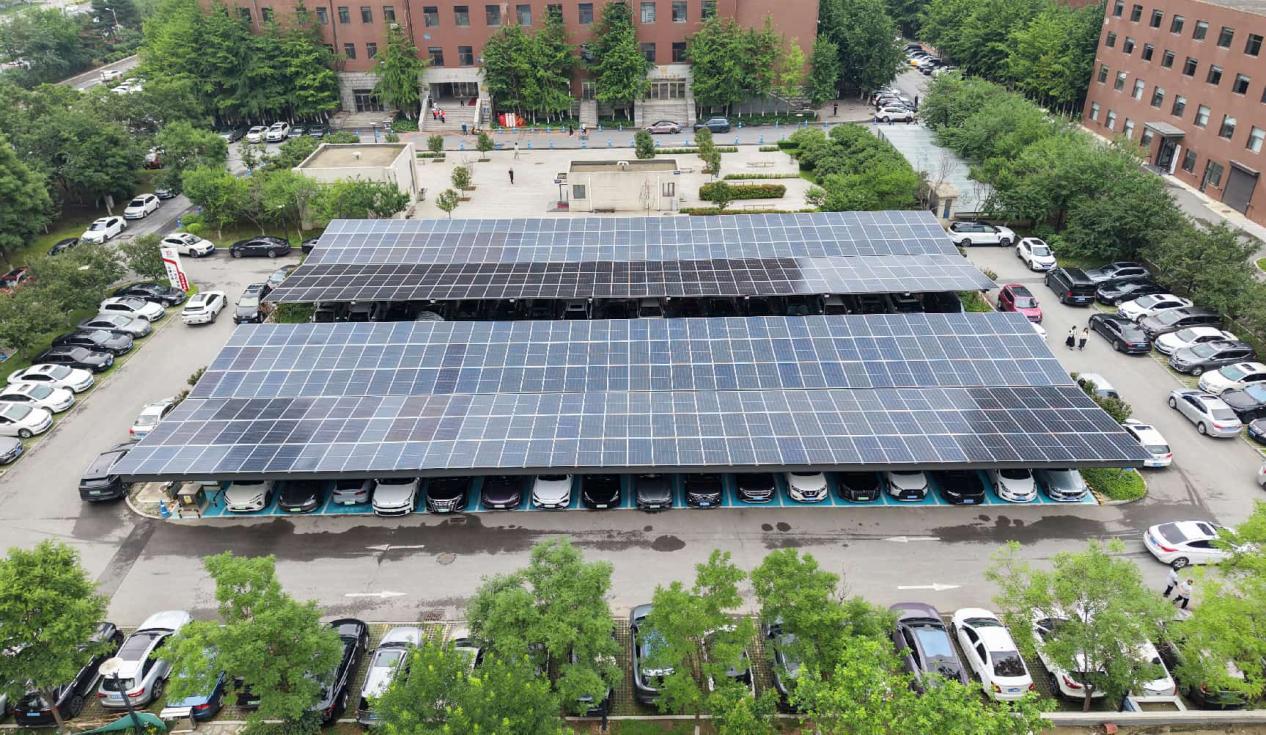 China’s newly released plan for building a clean, low-carbon energy system by 2030, as reported by People’s Daily Online, is not just another policy update—it reads like a full-scale redesign of the world’s largest energy infrastructure. The ambition to establish a “basically clean, low-carbon, secure and efficient new energy system” within roughly one five-year cycle (2026–2030) signals a transition that is simultaneously technological, economic, and geopolitical in scale.
At the center of the plan is a striking set of quantitative targets. China’s total energy production capacity is projected to reach 5.8 billion tons of standard coal equivalent, while electricity demand is expected to grow by approximately 600 billion kWh annually during the period. This alone suggests a system under sustained high-load expansion, not contraction, meaning decarbonization is being layered onto growth rather than replacing it. In systems engineering terms, this is a “dual-pressure transition”: rising demand plus structural substitution, which significantly increases grid complexity and operational variance.
One of the most consequential indicators is the target that new energy sources will exceed 50% of installed power generation capacity, with non-fossil energy reaching 50% of total electricity output. This implies a tipping point in the generation mix, where fossil fuels shift from baseload dominance to balancing and backup roles. If achieved, the effective capacity ratio would move from a historically fossil-heavy distribution (>60–70%) to a near parity structure, fundamentally changing marginal pricing dynamics, dispatch priority, and reserve management models.
From a power systems perspective, this introduces measurable volatility. High renewable penetration typically increases frequency deviation risk, ramping requirements, and grid balancing costs. International studies suggest that when variable renewables exceed 40–50% of capacity, system-wide integration costs can rise by 15–30% unless offset by storage and smart grid deployment. China’s plan directly addresses this through large-scale investment in long-duration energy storage, grid-forming inverter systems, and AI-driven grid management under the “AI + power grid” initiative.
The financial scale is equally significant. Total planned investment exceeding 20 trillion yuan (approximately $2.94 trillion) over five years translates to an average annual capital deployment of around 4 trillion yuan. Within this, power grid investment alone is expected to surpass 5 trillion yuan, marking a more than 30% increase compared to the previous Five-Year Plan cycle. In macroeconomic terms, this level of capex represents a sustained infrastructure stimulus equivalent to several percentage points of annual GDP, while simultaneously targeting decarbonization.
What stands out from an industrial policy perspective is the explicit integration of energy with emerging computing infrastructure. The stated strategy of “boosting computing power with electricity and driving power industry development via computing demand” signals convergence between digital infrastructure and energy systems. This implies co-optimization of data centers, load balancing, and renewable generation zones—effectively treating electricity demand not as a passive variable but as a controllable system input. In practical terms, this could reduce peak load volatility by 8–15% in highly integrated regions if demand-response systems scale effectively.
The grid expansion strategy is particularly ambitious. The plan includes 15 new ultra-high-voltage (UHV) direct current transmission corridors, raising west-to-east transmission capacity above 420 million kilowatts. This reinforces China’s spatial energy arbitrage model, where renewable generation in resource-rich western regions is transported to high-consumption coastal clusters. In engineering terms, this reduces curtailment losses and improves capacity utilization rates, potentially increasing renewable efficiency by 5–10 percentage points in constrained regions.
However, the system is not without constraints. The report explicitly acknowledges geopolitical risks affecting oil and gas supply chains, as well as domestic challenges from rapid renewable integration. This dual risk exposure highlights a transitional paradox: while renewable capacity expands, fossil fuel infrastructure is still being strengthened to ensure security. The inclusion of oil, gas, coal, and coal-to-gas projects indicates a “multi-layer redundancy strategy” rather than linear substitution.
From a market design perspective, the emphasis on “mature pricing and market mechanisms” is critical. Electricity markets under high renewable penetration require more granular pricing signals, often shifting from annual or monthly contracts to real-time or nodal pricing systems. Without this, inefficiencies such as negative pricing events or curtailment spikes become more frequent. The move toward integrated market mechanisms suggests China is preparing for higher-frequency pricing adjustments and potentially more volatile marginal pricing distributions.
Seen in a global context, the scale is unprecedented. Few energy systems are attempting simultaneous expansion of capacity, structural decarbonization, grid modernization, and digital integration at this magnitude. The combination of 20 trillion yuan investment, 50% renewable penetration targets, and large-scale UHV deployment places China in a unique position as both the largest energy consumer and one of the fastest large-scale energy transformers.
As highlighted in People’s Daily , this is ultimately a systems-level transition rather than a simple fuel substitution. The outcome will depend less on installed capacity alone and more on operational stability metrics—frequency deviation, reserve margins, curtailment rates, and demand response efficiency.
If successful, the transition could redefine the global benchmark for large-scale decarbonized power systems. If not, the stress points will likely emerge in grid balancing costs, regional transmission bottlenecks, and renewable integration inefficiencies. Either way, the next five years will function as a real-world stress test of whether a high-growth economy can simultaneously achieve deep decarbonization without compromising system reliability.
News source: https://peoplesdaily.pdnews.cn/china/er/30052576982
China’s newly released plan for building a clean, low-carbon energy system by 2030, as reported by People’s Daily Online, is not just another policy update—it reads like a full-scale redesign of the world’s largest energy infrastructure. The ambition to establish a “basically clean, low-carbon, secure and efficient new energy system” within roughly one five-year cycle (2026–2030) signals a transition that is simultaneously technological, economic, and geopolitical in scale.
At the center of the plan is a striking set of quantitative targets. China’s total energy production capacity is projected to reach 5.8 billion tons of standard coal equivalent, while electricity demand is expected to grow by approximately 600 billion kWh annually during the period. This alone suggests a system under sustained high-load expansion, not contraction, meaning decarbonization is being layered onto growth rather than replacing it. In systems engineering terms, this is a “dual-pressure transition”: rising demand plus structural substitution, which significantly increases grid complexity and operational variance.
One of the most consequential indicators is the target that new energy sources will exceed 50% of installed power generation capacity, with non-fossil energy reaching 50% of total electricity output. This implies a tipping point in the generation mix, where fossil fuels shift from baseload dominance to balancing and backup roles. If achieved, the effective capacity ratio would move from a historically fossil-heavy distribution (>60–70%) to a near parity structure, fundamentally changing marginal pricing dynamics, dispatch priority, and reserve management models.
From a power systems perspective, this introduces measurable volatility. High renewable penetration typically increases frequency deviation risk, ramping requirements, and grid balancing costs. International studies suggest that when variable renewables exceed 40–50% of capacity, system-wide integration costs can rise by 15–30% unless offset by storage and smart grid deployment. China’s plan directly addresses this through large-scale investment in long-duration energy storage, grid-forming inverter systems, and AI-driven grid management under the “AI + power grid” initiative.
The financial scale is equally significant. Total planned investment exceeding 20 trillion yuan (approximately $2.94 trillion) over five years translates to an average annual capital deployment of around 4 trillion yuan. Within this, power grid investment alone is expected to surpass 5 trillion yuan, marking a more than 30% increase compared to the previous Five-Year Plan cycle. In macroeconomic terms, this level of capex represents a sustained infrastructure stimulus equivalent to several percentage points of annual GDP, while simultaneously targeting decarbonization.
What stands out from an industrial policy perspective is the explicit integration of energy with emerging computing infrastructure. The stated strategy of “boosting computing power with electricity and driving power industry development via computing demand” signals convergence between digital infrastructure and energy systems. This implies co-optimization of data centers, load balancing, and renewable generation zones—effectively treating electricity demand not as a passive variable but as a controllable system input. In practical terms, this could reduce peak load volatility by 8–15% in highly integrated regions if demand-response systems scale effectively.
The grid expansion strategy is particularly ambitious. The plan includes 15 new ultra-high-voltage (UHV) direct current transmission corridors, raising west-to-east transmission capacity above 420 million kilowatts. This reinforces China’s spatial energy arbitrage model, where renewable generation in resource-rich western regions is transported to high-consumption coastal clusters. In engineering terms, this reduces curtailment losses and improves capacity utilization rates, potentially increasing renewable efficiency by 5–10 percentage points in constrained regions.
However, the system is not without constraints. The report explicitly acknowledges geopolitical risks affecting oil and gas supply chains, as well as domestic challenges from rapid renewable integration. This dual risk exposure highlights a transitional paradox: while renewable capacity expands, fossil fuel infrastructure is still being strengthened to ensure security. The inclusion of oil, gas, coal, and coal-to-gas projects indicates a “multi-layer redundancy strategy” rather than linear substitution.
From a market design perspective, the emphasis on “mature pricing and market mechanisms” is critical. Electricity markets under high renewable penetration require more granular pricing signals, often shifting from annual or monthly contracts to real-time or nodal pricing systems. Without this, inefficiencies such as negative pricing events or curtailment spikes become more frequent. The move toward integrated market mechanisms suggests China is preparing for higher-frequency pricing adjustments and potentially more volatile marginal pricing distributions.
Seen in a global context, the scale is unprecedented. Few energy systems are attempting simultaneous expansion of capacity, structural decarbonization, grid modernization, and digital integration at this magnitude. The combination of 20 trillion yuan investment, 50% renewable penetration targets, and large-scale UHV deployment places China in a unique position as both the largest energy consumer and one of the fastest large-scale energy transformers.
As highlighted in People’s Daily , this is ultimately a systems-level transition rather than a simple fuel substitution. The outcome will depend less on installed capacity alone and more on operational stability metrics—frequency deviation, reserve margins, curtailment rates, and demand response efficiency.
If successful, the transition could redefine the global benchmark for large-scale decarbonized power systems. If not, the stress points will likely emerge in grid balancing costs, regional transmission bottlenecks, and renewable integration inefficiencies. Either way, the next five years will function as a real-world stress test of whether a high-growth economy can simultaneously achieve deep decarbonization without compromising system reliability.
News source: https://peoplesdaily.pdnews.cn/china/er/30052576982
Stay in the loop
The smartest minute in New York, in your inbox.
Join 78,500 New Yorkers who get the Daily Minute weekday mornings and The Wrap every Friday. Free, fast, and fiercely local.
Subscribe to the Daily Minute