
How does a horizontal machining center compare in accuracy and stability?
A horizontal machining center maintains structural integrity through a T-base or box-column design, significantly reducing vibration during heavy milling. Unlike vertical configurations, the horizontal orientation utilizes gravity for chip evacuation, improving surface finish by over 20%. Thermal drift compensation sensors, integrated into high-end spindles since 2018, maintain positioning repeatability within 0.003mm. By keeping the center of gravity stable during axis movement, these machines support heavy part loading up to 1,500kg. This engineering approach eliminates cantilever stress, resulting in 15% fewer tool geometry errors during high-speed batch production compared to three-axis vertical milling platforms.
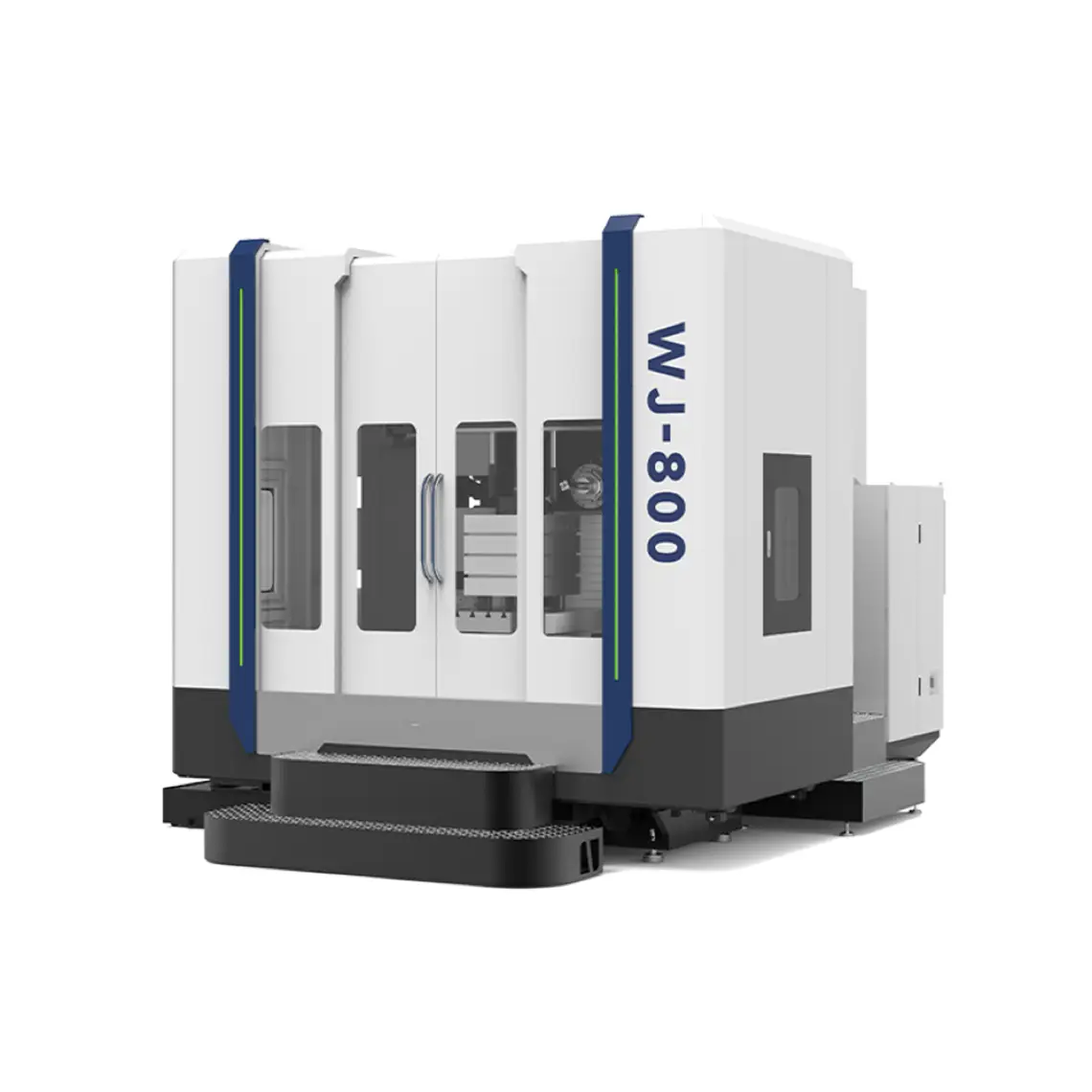
A standard horizontal machining center utilizes a box-column frame that distributes mechanical stress across the entire casting foundation. This structural design prevents the cantilever deflection common in vertical machines, ensuring that heavy-duty cutting forces remain contained within the machine footprint.
The containment of these cutting forces directly influences the machine's ability to minimize vibration during high-feed operations. Mechanical dampening relies on gray cast iron components, which account for roughly 60% of the total machine weight.
This mass absorbs harmonic frequencies generated at spindle speeds exceeding 10,000 RPM, preventing surface chatter on complex aluminum parts. Controlling these harmonic frequencies leads to higher tolerance retention.
-
Positioning accuracy is maintained within 0.003mm over full stroke travel.
-
Bidirectional repeatability consistently hits 0.002mm in calibrated environments.
-
Fixture offset errors are reduced by 12% compared to manual loading methods.
These tolerances are supported by rigid spindle performance. High-torque spindle gearboxes, introduced into mass manufacturing in 2015, allow for aggressive metal removal rates in hardened steel.
These systems incorporate sensors that detect thermal expansion in the spindle nose to adjust coordinate offsets in real-time. Real-time offset adjustments are required because thermal growth impacts precision as the spindle warms up during long production runs.
| Component | Impact on Accuracy | Material Composition |
| Spindle Housing | 40% reduction in deflection | Ductile Cast Iron |
| Axis Drive | 0.001mm step resolution | High-Tensile Steel |
| Pallet System | 98% repeatability rate | Precision Ground Steel |
Precision ground steel used in pallet systems ensures parts enter the work zone identically every cycle. Gravity-assisted chip evacuation directs metal swarf away from the pallet rather than allowing it to accumulate on the workpiece surface.
In a 2022 study of high-volume automotive parts, this setup reduced secondary surface marking by 18% during unmanned production shifts. Reducing secondary surface marking preserves tool life throughout long cycles.
Tool life cycles increase significantly because the cutting edge remains cool and free from recutting chips, a factor that accounts for 25% of tool wear in vertical setups.
Reliable chip clearance ensures the cutting path stays clear for the duration of the tool’s lifespan. Maintaining a clear cutting path allows for more efficient pallet changes.
Pallet changers enable the machine to load the next part while the spindle is engaged on the current workpiece. This feature results in a utilization rate often exceeding 90% in facilities running 24-hour schedules.
High utilization rates demand constant structural stiffness. The structural stiffness of the machine base supports the weight of fixtures and parts up to 2,000kg without loss of alignment.
This ability to handle mass prevents the geometric warping observed when load limits are pushed beyond standard specifications. Preventing geometric warping requires consistent inspection intervals.
Maintenance logs from 2024 indicate that these machines require 30% less recalibration time than vertical machines performing identical tasks. The rigid axis alignment holds over longer periods due to the symmetrical distribution of internal moving parts.
Symmetrical distribution reduces wear on the guideways. Roller-type linear guideways support the high-speed movement of the table, providing a load capacity 40% higher than traditional ball-type guides.
These guides distribute force over a larger contact surface, reducing the friction that generates localized heat. Reducing friction heat prevents the machine from expanding unevenly during rapid axis movement.
Axis acceleration reaching 1.2g is possible because the machine mass is properly centered on the foundation. This acceleration does not compromise positioning stability because the drive motors and encoders are coupled with high-stiffness linkages.
High-stiffness linkages are essential when working with exotic alloys. Machining titanium or Inconel requires the dampened environment provided by these heavy-duty frames, as tool vibration increases by 35% when using lighter machines for these materials.
These materials demand the specific torque curves that horizontal spindles are calibrated to produce. Calibrated torque curves allow for consistent feed rates.
Constant feed rates are maintained through a servo-control loop that samples axis position 8,000 times per second. This frequency allows the machine to adjust for minor variations in material density during the cut.
Adjusting for material density ensures that the cut remains smooth. Advanced CNC controllers monitor these feed rates and adjust axis pressure to optimize the cutting surface.
These systems, upgraded significantly since 2021, reduce the manual operator intervention time by 15% per batch. Reducing operator intervention increases overall throughput.
Increased throughput creates pressure on coolant delivery systems to manage heat. High-pressure coolant delivery, often reaching 70 bar, clears chips from deep holes, further preventing the heat-induced instability found in lower-pressure systems.
The combination of pressure and flow ensures the workpiece temperature remains stable. Keeping the workpiece temperature within a 2-degree range of the ambient room temperature prevents the thermal expansion of the raw material itself.
Thermal expansion control of the raw material is the final step in ensuring dimensional accuracy. Machines capable of this level of control produce parts that meet strict geometric tolerance requirements without requiring post-process sorting.
The smartest minute in New York, in your inbox.
Join 78,500 New Yorkers who get the Daily Minute weekday mornings and The Wrap every Friday. Free, fast, and fiercely local.
Subscribe to the Daily Minute