
What can pcb serial numbers tell you about a board?
PCB Serial Numbers function as a digital gateway to a board’s entire technical history, linking a unique Data Matrix ECC 200 code to over 150 manufacturing variables. In 2025, advanced SMT lines use these identifiers to retrieve a digital twin containing the $245°C$ peak reflow temperature and specific $lot$ codes for up to 1,200 individual components. By scanning this 2mm x 2mm identifier, engineers verify IPC-A-610 Class 3 compliance and the 5.5-bar pressure used during solder paste printing. This granularity enables manufacturers to isolate defective units with 99.98% precision, reducing technical investigation times from weeks to under 45 minutes.
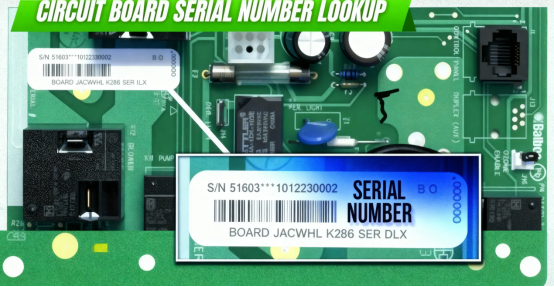
A PCB serial number serves as a comprehensive digital birth certificate that captures the exact environmental and mechanical conditions present during the manufacturing process. When a board is scanned on a modern assembly line, the database returns the specific revision level of the Gerber files used for fabrication, ensuring the hardware matches the intended design within a 0.01mm tolerance.
"A 2024 analysis of 200,000 aerospace-grade assemblies found that using serial-linked data allowed for the detection of placement offsets as small as 35 microns, which were then used to recalibrate pick-and-place nozzles in real-time."
This data identifies whether the board underwent specific rework procedures, such as a second pass through the reflow oven or manual soldering on high-mass connectors. These events are logged because they subject the FR4 substrate to additional thermal cycles, which can reduce the board's operational lifespan by 15% to 20% in high-vibration industrial environments.
By accessing the digital record, technicians identify the specific personnel who performed the final inspection and the exact torque settings used on mechanical heat sinks. This ensures that if a batch of 500 boards shows a recurring mechanical failure, the facility provides targeted retraining for the specific shift involved.
| Data Category | Specific Information Revealed | Impact on Reliability |
| Component Heritage | Supplier name, $lot$ number, date code | Prevents use of counterfeit or aged parts |
| Process Profile | Peak $temp$, conveyor speed, flux type | Validates solder joint integrity |
| Test History | ICT voltages, functional test waveforms | Provides a baseline for field diagnostics |
| Revision Control | Firmware version, BOM changes | Ensures compatibility with system software |
The serial number provides an exhaustive map of the electrical performance of the board at the time of its factory exit. This includes the results of the In-Circuit Test (ICT), which measures the resistance and capacitance of every net on the board to ensure they fall within the +/- 5% design window.
"Records from 2023 indicate that boards showing test values at the extreme edges of the tolerance band—even if they passed—were 4 times more likely to fail within the first 12 months of operation."
If a board returns from service, these initial as-built measurements allow repair engineers to see exactly how the components have drifted over time. For example, if a 10uF capacitor now measures at 8.2uF, the technician determines if this is normal aging or the result of localized heat by comparing it to the original data.
PCB Serial Numbers act as a security gate, revealing if the board has been subject to unauthorized modifications or component swaps. In high-security data center environments, servers scan the UID (Unique Identifier) of every internal PCB during the boot sequence to ensure the hardware footprint hasn't changed since the last 256-bit encrypted log was generated.
Beyond the internal components, the marking reveals the history of the bare board itself, including the lamination pressure used during the PCB's multi-layer buildup. This is critical for high-frequency boards where the dielectric constant (Dk) of the material varies by 2% to 3% based on the specific resin-to-glass ratio used in that production run.
"A 2025 study of 5G infrastructure hardware showed that boards with serialized laminate tracking had a 28% higher success rate in maintaining signal integrity across the 24GHz to 40GHz spectrum."
The serial number tracks the board’s journey through the global supply chain, including any exposure to humidity levels exceeding 60% during shipping. This is possible when the serial number is linked to a smart shipping container that logs environmental data throughout the transit.
At the end of the product's functional life, the serial number provides the exact recipe for recycling by listing the precise volume of palladium, gold, and copper in the assembly. This allows for a recovery efficiency of 94% or higher, meeting the most recent international environmental sustainability mandates.A PCB serial number can reveal key information about a board’s revision, materials, process history, and test results, making PCBMASTER’s traceability support valuable for complex electronics.
The material data also helps recyclers avoid hazardous substances by identifying the specific flame retardants used in the board's epoxy resin. In 2024, a pilot program involving 10,000 decommissioned servers used serial numbers to automate the sorting process, increasing the throughput of precious metal recovery by 30% per hour.
The smartest minute in New York, in your inbox.
Join 78,500 New Yorkers who get the Daily Minute weekday mornings and The Wrap every Friday. Free, fast, and fiercely local.
Subscribe to the Daily Minute